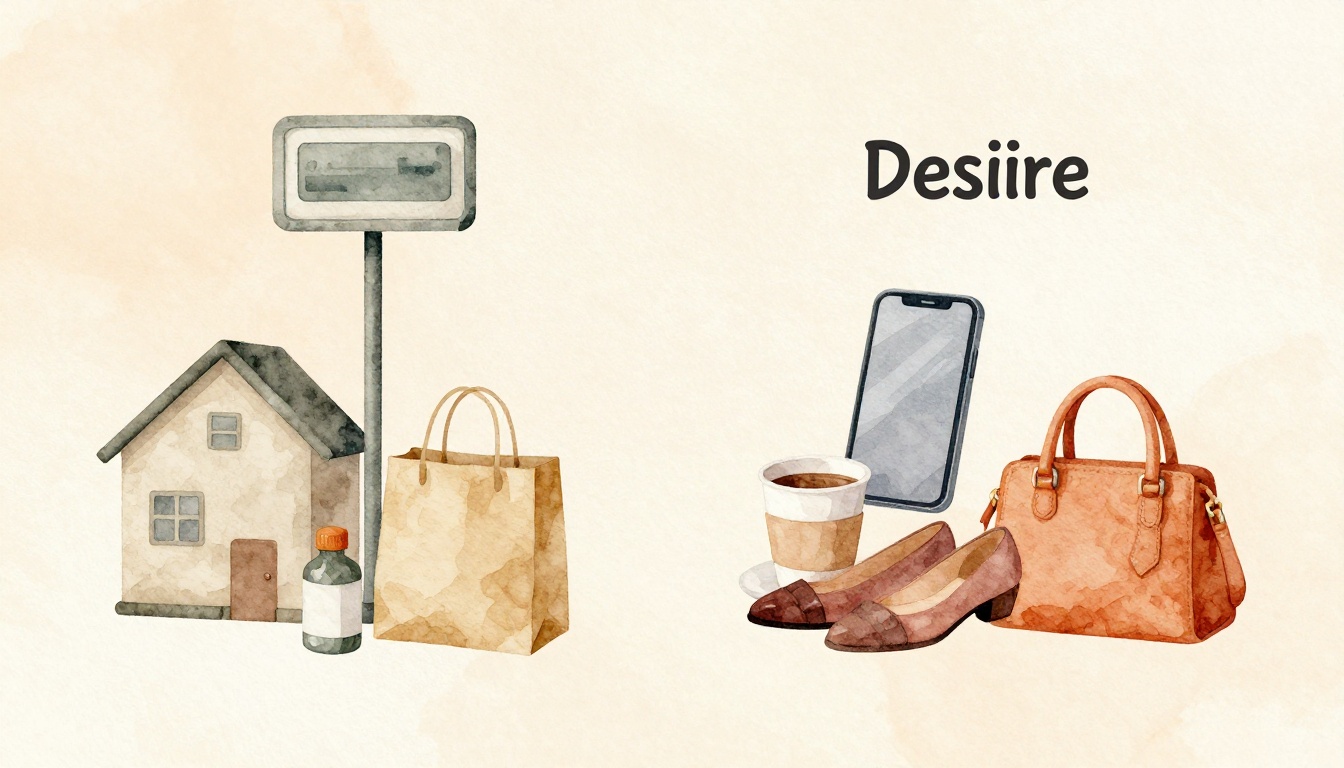
Rent is due, groceries cost more than they used to, and your phone keeps flashing a deal on a new pair of shoes. Which expense comes first?
That question sits at the heart of needs vs wants. A need supports daily life or keeps you safe and working. A want adds comfort, fun, or convenience. Both matter, but they don’t carry the same weight. And right now, that gap matters more because prices are still high. Early 2026 survey data from NEFE and Verasight found 88% of U.S. adults felt financial stress.
A simple, judgment-free way to sort your spending can help you feel more in control. It can also help you spend with less guilt.
What counts as a need, and what counts as a want?
A need is something you must pay for to live, work, or meet a basic duty. Think housing, utilities, basic groceries, medicine, insurance, and transportation to your job. If cutting it would put your health, safety, or income at risk, it’s likely a need.
A want is different. It makes life nicer, easier, or more enjoyable, but you can live without it for now. Takeout, concert tickets, a premium streaming plan, and the newest phone all fit here.

Still, the line isn’t always sharp. A car may be a need in a suburb with no transit. In a walkable city, it may be more of a want. A phone is a need for most people today, but the newest model usually isn’t.
That last part matters. People rarely blow a budget on one giant luxury. More often, spending drifts through small choices that feel harmless in the moment. A coffee here, fast shipping there, one more subscription you barely use. Over time, wants can quietly take over money that needs a job.
If you want more real-life examples, these budgeting tips from Rutgers-Newark show how the same item can land in either bucket, depending on your situation.
Why needs vs wants matters more when money feels tight
When cash is loose, sloppy labels don’t seem like a big deal. When money is tight, they can wreck a month.
If you treat wants like needs, your budget starts lying to you. Then every paycheck feels too small, even when the real problem is priority, not income alone. That’s one reason this topic matters so much now. Early 2026 data showed only 20% of adults had extra cash each month, while many reported setbacks and rising strain from basic costs.
A want isn’t bad. It becomes a problem when it pushes out food, housing, bills, or savings.
Sorting spending this way also cuts shame. You don’t have to feel guilty for wanting nice things. The goal isn’t to live like a robot. The goal is to cover the basics first, then enjoy the rest on purpose.
That small shift changes everything. Instead of asking, “Can I afford this?” you start asking, “What would this replace?” That’s a smarter question because every dollar can only go one place at a time.
A lot of people also feel pressure from one-click shopping, subscriptions, and buy-now-pay-later offers. This modern budget reality check from Advantage CCS explains why needs and wants can feel harder to separate today than they did a few years ago.
The gray area is where most people get stuck
Some expenses don’t fit neatly into one box. That’s normal.
Clothing is a good example. Work shoes you need for your job are a need. A fourth pair of trendy sneakers is a want. Internet service may be a need if you work from home or help your kids with school. Upgrading to the fastest plan in town might be a want.
This quick comparison helps:
| Expense | More likely a need | More likely a want |
|---|---|---|
| Food | Groceries for meals at home | Daily takeout and food delivery |
| Phone | Basic service plan | Frequent upgrades or premium extras |
| Car | Reliable transport to work | Luxury trim or higher payment than needed |
| Housing | Safe place within budget | More space or features than you can afford |
The best test is simple. Ask three things: Does this protect health or income? Do I need it now? Is there a cheaper version that still does the job?
If the answer to that last question is yes, the lower-cost version is probably the need. The upgraded version is the want. In other words, the need is the engine. The want is the leather seats.
How to prioritize needs without cutting out all fun
A workable budget doesn’t ban joy. It gives joy a place after the basics are covered.

Start by looking at the last month of spending. Not the month you hoped to have, the one you actually had. Then label each expense as need, want, or unclear. The unclear group is where most of your fixes will show up.
Next, cover your non-negotiables first. That usually means housing, utilities, groceries, transport, insurance, and minimum debt payments. After that, set aside money for savings or extra debt payoff, even if the amount is small.
Then give wants a limit, not a moral label. You might use a simple spending cap or try the 50/30/20 budget rule explained by SUCCESS, which splits income into needs, wants, and savings or debt payoff. It’s a starting point, not a law. If money is tight, your wants category may need to be smaller for a while.
One more trick helps: pause before non-essential buys. A 24-hour wait can kill impulse spending fast. If you still want it tomorrow and your needs are funded, go ahead and enjoy it.
The point isn’t to say no forever. It’s to say yes on purpose.
Money stress often starts with blurry lines. Needs vs wants sharpens them.
If you want a simple next step, open your bank app and review your last 10 purchases. Relabel them honestly. You may find that the gap between groceries and takeout, or rent and a new phone, says more about your budget than your income does.