U.S. household debt reached $18.8 trillion by the end of 2025, and credit card balances climbed to about $1.28 trillion in Q4 2025. If your bills feel like they’re all shouting at once, you’re not alone.
The good news is simple: you do not need to pay everything off at once. You need a smart order, one that lowers stress, helps you avoid missed payments, and turns scattered effort into steady progress.
Start by getting a clear picture of every debt you owe
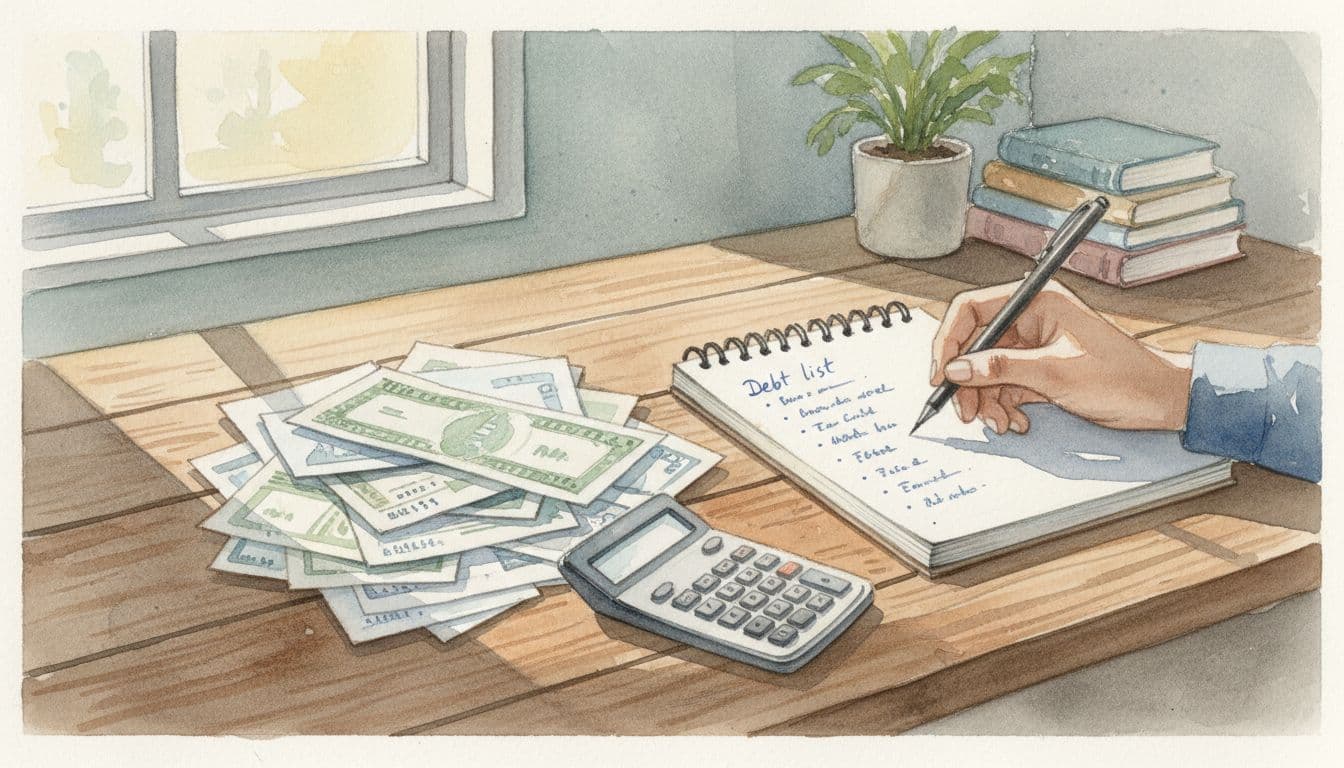
Before you pick a payoff method, build a plain, honest debt list. Think of it like a map. If you don’t know where each road goes, it’s easy to waste gas.
Write down every balance you owe, even the small ones. Include credit cards, personal loans, auto loans, student loans, medical debt, tax debt, and any buy-now-pay-later balances. Then split them into secured debts and unsecured debts. Secured debts are tied to property, like a car loan. Unsecured debts, such as credit cards and personal loans, usually don’t put an asset on the line right away.
That step matters more in 2026 because card rates are still high. Recent reports on current credit card interest rates show averages around the low 20% range, which means revolving balances can get expensive fast.
List the details that actually change your payoff plan
This quick table shows the numbers worth tracking for each debt.
| Detail | Why it matters |
|---|---|
| Balance | Tells you how big the debt is and whether a quick payoff is possible |
| APR | Shows how expensive the debt is over time |
| Minimum payment | Helps you avoid late fees and stay current |
| Due date | Prevents missed payments and credit damage |
| Fixed or variable rate | Variable rates can rise and change your plan |
| Late fee amount | Shows the cost of falling behind |
| Promo APR end date | Warns you when a low rate may disappear |
| Penalty APR risk | Missing payments can make a bad rate even worse |
Keep the list simple. A notebook, spreadsheet, or budgeting app is enough. You’re not building a perfect system. You’re building one you’ll keep using.
Spot the debts that can hurt you fastest if you ignore them
Some debts deserve attention before the math says they should. For example, an auto loan that could lead to repossession often needs faster action than a small store card. The same goes for accounts already past due or close to collections.
Protect the basics first. Housing, utilities, insurance, and transportation come before trying to score a quick emotional win on a tiny balance.
If a debt is already behind, move it higher on your list. Damage tends to snowball when fees pile up and calls start. A small fire is easier to put out than a house full of smoke.
Choose the best debt payoff method for how you think and spend
There isn’t one perfect method for everyone. Some people need early wins to stay engaged. Others feel better saving as much interest as possible. Both are valid.
What matters most is sticking with the plan when life gets annoying, not when motivation is high.
Use the debt snowball if quick wins help you stay motivated
With the debt snowball, you pay minimums on every debt and put every extra dollar toward the smallest balance first. Once that debt is gone, you roll that payment into the next smallest.
Why does it work so well for many people? Because progress is visible. One balance disappears, then another. That can feel like finally seeing daylight.
The tradeoff is cost. If your smallest debt has a low rate and your biggest card has a brutal APR, you may pay more interest overall. Still, if momentum keeps you consistent, the snowball can beat a “perfect” plan you abandon after six weeks.
Use the debt avalanche if saving the most on interest is your top goal
With the debt avalanche, you keep paying minimums on all debts, but your extra money goes to the balance with the highest APR first. This method usually saves the most money and often shortens payoff time.
That’s the math-first option. If one card charges 28% and another charges 9%, the 28% balance is doing more damage every month. Attack that one first.
The drawback is emotional. Your highest-rate debt may also be a large balance, so progress can look slow at the start. Still, side-by-side comparisons like this debt snowball vs. avalanche breakdown show avalanche can save a large amount of interest over time.
Try a hybrid plan if you need both momentum and math on your side
A hybrid plan blends the two. For example, you might knock out one small balance first, then switch to your highest-rate credit cards. That first win clears mental clutter, while the rest of your plan follows the numbers.
This approach makes sense if you’ve struggled to stay consistent in the past. Personal finance isn’t a spelling test. There’s no prize for picking the “pure” method if it doesn’t fit your habits.
Minimums first, essentials second, then send every extra dollar to one target debt.
That’s the core rule, no matter which payoff style you use.
Know which debts should move to the front of the line first
Methods help, but real life needs an order of operations. If you’re choosing between three urgent bills and one extra payment, you need a decision rule.
A practical priority order looks like this: stay current on all minimums, protect housing and basic living costs, address any debt that could trigger fast or severe harm, then focus extra cash on your main target. The right answer depends on risk, interest, and behavior, not balance alone.
Always cover minimum payments before you attack one balance
Minimum payments are the floor. If you miss them, lenders may charge late fees, report the late payment, or hike your rate. Then your plan gets harder before it gets easier.
Set this as non-negotiable. Even if you can only send a little extra to your target debt this month, keep every account current if you can.
A missed minimum can also shrink your options later. It may hurt your credit enough to make refinancing or a balance transfer harder to get.
Put high-interest credit cards near the top when rates are draining your budget
After minimums and essential-risk debts, high-interest credit cards often deserve top billing. That’s because revolving debt compounds the problem. Interest eats money you could have used to reduce principal.
As of March 2026, average credit card interest rates remain expensive by historical standards. So if your cards carry double-digit APRs, they can quietly block progress on everything else.
That doesn’t mean every card beats every other debt. A past-due car loan may still come first. Still, once you’ve protected essentials and stopped immediate damage, cards with high APRs are usually the best place for extra dollars.
Move secured or overdue debts up if missing payments could cause bigger damage
Some debts carry more risk than their interest rate suggests. Auto loans are the clearest example, because missing enough payments can put your car at risk. If that car gets you to work, the fallout can spread quickly.
Overdue taxes, child support, and accounts already in serious delinquency can also need faster action. The same applies if a lender is threatening collections or legal action.
Keep this simple: if ignoring a debt could make you lose transportation, trigger major penalties, or create fast-moving trouble, move it up. If the rules around your debt are complex, get qualified help.
Make your payoff plan easier to follow every month
A good debt plan is not about white-knuckling your way through the year. It’s about making the right action easier than the wrong one.
That means finding a bit of extra cash, automating what you can, and building a system that works on tired Tuesdays, not only on motivated Sundays.
Find extra money in your budget without making your plan miserable
You don’t need an extreme reset. Start with small cuts that won’t make you quit by next month. Pause a few nonessential expenses. Trim takeout, impulse shopping, subscription creep, or convenience spending that doesn’t matter much to you.
Use windfalls well. Tax refunds, bonuses, cash gifts, and side income can give your plan a real push. The same goes for future raises. If your lifestyle expands every time your pay does, debt payoff drags on.
A few ideas help most:
- Cut one or two weak spots in your budget, not everything you enjoy.
- Send half or all windfalls to your target debt.
- Keep the freed-up payment rolling after each balance is paid off.
Use automation and simple tracking so you do not fall behind
Set autopay for minimum payments if your checking balance is stable enough. That protects you from late fees and accidental misses. Then add calendar reminders a few days before each due date, so nothing sneaks up on you.
Track progress in one place. A spreadsheet works. So does a notes app or a plain paper chart. The tool matters less than the habit.
Seeing balances drop helps more than people expect. Debt can feel like pushing a boulder uphill. Tracking lets you look back and notice the ground you’ve already covered.
Know when to consider balance transfers, consolidation, or credit counseling
Sometimes the order isn’t the only problem. The structure of the debt may be part of the issue too. A balance transfer or consolidation loan can help if it lowers your rate and simplifies payments.
Read the fine print first. Transfer fees, teaser rates that expire, and longer loan terms can erase the benefit if you’re not careful.
If you feel stuck, nonprofit credit counseling can be a smart next step. Reputable groups such as the National Foundation for Credit Counseling can connect you with certified counselors who review your budget and repayment options. Support doesn’t mean failure. It means you’re getting help before the problem gets bigger.
Prioritizing multiple debts works best when the plan fits your real life. Stay current, protect what you can’t afford to lose, and point every extra dollar where it does the most good.
That’s how the noise starts to quiet down. One clear list, one method, one target.
Make your debt list today, then choose snowball, avalanche, or a hybrid plan before your next due date.