The best bank account depends on how you use money day to day. One account isn’t right for everyone, because your best fit comes down to how you spend, save, earn interest, avoid fees, and get cash when you need it.
In 2026, you have more choices than ever, including traditional banks, online banks, credit unions, high-yield savings accounts, money market accounts, and CDs. Some work better for everyday spending, while others are built to grow your savings with less hassle.
Next, let’s match each account type to the way you handle money now.
Start with what you need the account to do
Before you compare banks, compare your habits. The right account starts with a simple question: What job does this money need to do for you? If you spend from it often, you need easy access. If you want it to grow, you need a better rate and the right rules.
Think of it like picking the right tool from a drawer. A checking account is your daily-use tool. Savings, money market accounts, and CDs are better for money you’re trying to protect or grow. Once you sort your money by purpose, your options get much clearer.
Choose checking for everyday spending and bill paying
If this is the account you use all week, checking is usually the best fit. It’s built for regular money movement, not long-term growth. That makes it the go-to choice for debit card purchases, paychecks, online bill pay, ATM withdrawals, and everyday transfers.
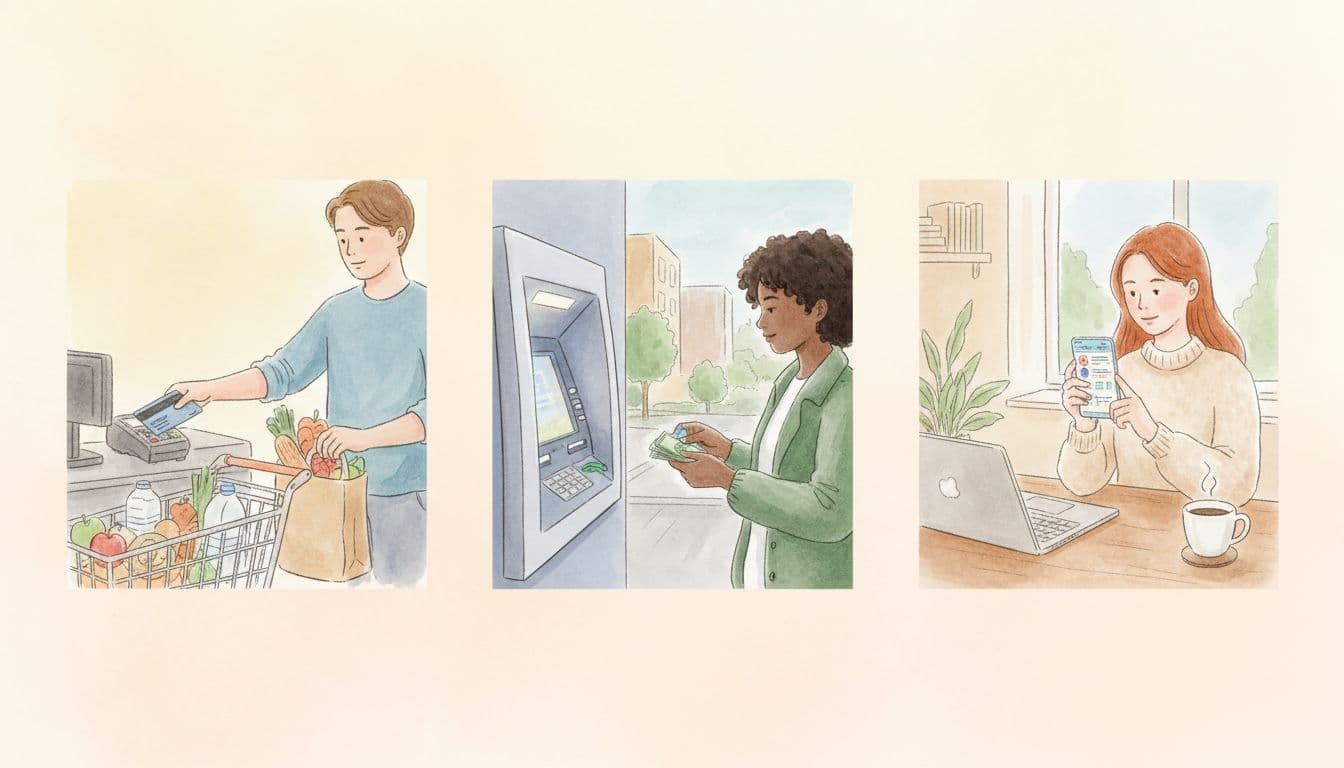
A checking account makes the most sense if you:
- Get paid by direct deposit
- Pay rent, utilities, or subscriptions every month
- Use a debit card often
- Need ATM access for cash
- Move money in and out regularly
Some checking accounts now offer interest, cash-back rewards, or early direct deposit. Those extras can be nice, and some top accounts are much better than the near-0% average paid by basic checking. Still, for daily use, features usually matter more than the rate. A slightly higher APY won’t help much if the account charges fees, has a weak ATM network, or makes bill pay a hassle.
So, focus on the parts you’ll notice every week:
- Monthly fees and how to avoid them
- ATM access, especially if you use cash
- Mobile app quality for deposits and transfers
- Bill pay tools and transfer speed
- Direct deposit options, including early payday features
If you’re comparing options, lists of the best checking accounts and banks with early direct deposit can help you spot useful features fast.
For day-to-day money, convenience beats yield almost every time.
Choose savings, money market, or CDs for money you want to grow
When the money isn’t for daily spending, move it out of checking. That’s where savings accounts, money market accounts, and CDs come in. They all help your cash earn more, but they work in different ways.
A plain savings account is the easiest place to start. It’s a smart home for an emergency fund, short-term savings goal, or cash you may need soon. You can still access your money, but it’s a little more out of reach than checking, which helps you avoid casual spending. Better yet, high-yield savings accounts often pay far more than the national average savings rate, which is around 0.6%, with top offers still much higher in 2026.
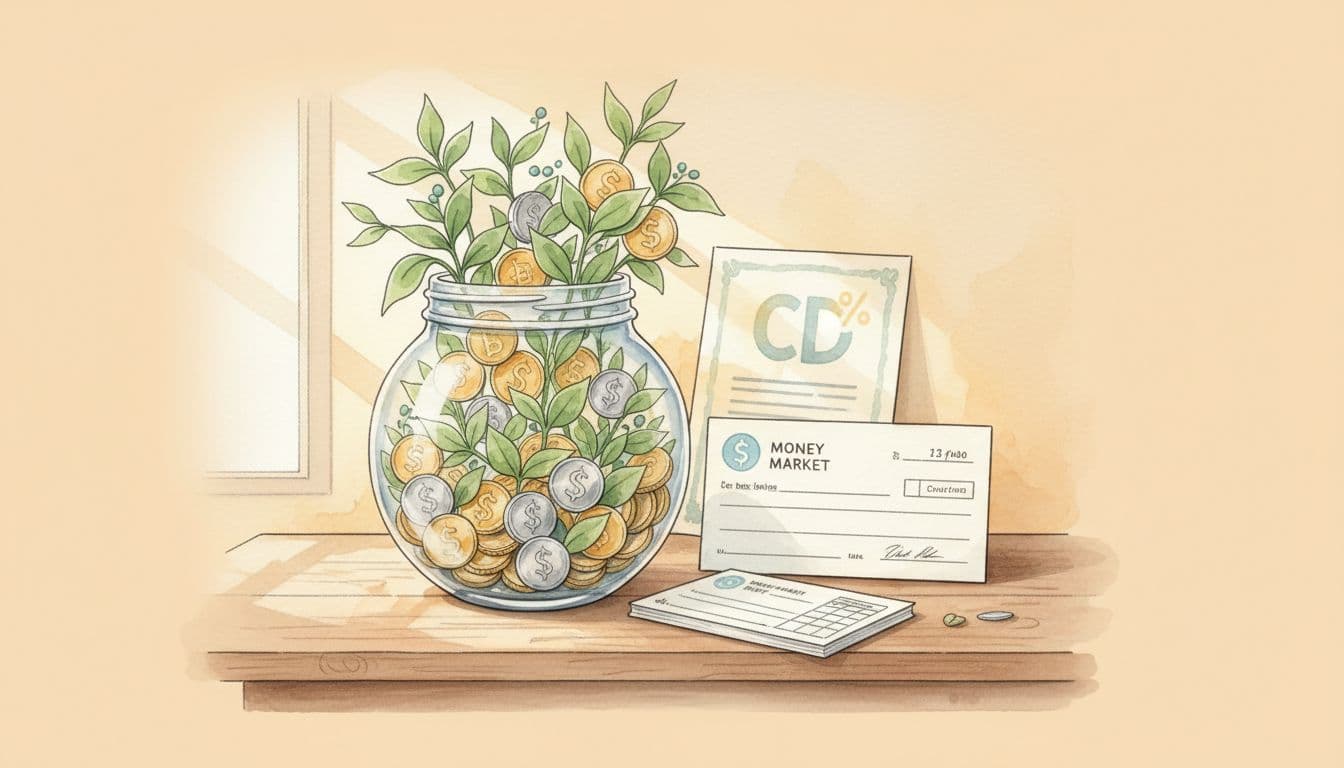
A money market account sits somewhere between checking and savings. It may offer a solid rate, and some accounts give you easier access to your money through checks or a debit card. That can be helpful if you want to earn more interest without giving up too much flexibility.
A CD, or certificate of deposit, works best when you can leave the money alone for a set time. In return, you usually get a fixed rate for that term. It’s a good fit for money you won’t need right away, like a down payment fund you’ll use next year. Pull the money out early, though, and you’ll likely pay a penalty.
Here’s a quick way to think about each one:
| Account type | Best for | Access to money | Rate outlook |
|---|---|---|---|
| Savings | Emergency funds and short-term goals | Easy | Good, especially with high-yield accounts |
| Money market | Savings with a bit more access | Fairly easy | Often competitive |
| CD | Money you can leave untouched | Limited until term ends | Often strong and fixed |
For a current side-by-side look at earnings, see this CBS News comparison of CDs, high-yield savings, and money market accounts.
The short version is simple: use checking for spending, savings for flexibility, money market for a middle ground, and CDs for money you can lock away. Once you know which bucket your money belongs in, choosing the bank gets much easier.
Compare the features that matter most before you open an account
Ads tend to spotlight the flashiest perk, usually a big bonus or a high rate. However, the best bank account is often the one that quietly saves you money, fits your routine, and doesn’t make you jump through hoops.
As you compare options, focus on real value: fees, access, rates, and usability. In 2026, plenty of strong accounts offer $0 monthly fees, solid mobile tools, and competitive savings rates. That means you can be picky, and you should be.
Look at monthly fees, minimum balance rules, and hidden charges
The first thing to check is simple: what will this account cost you if life gets busy? A bank can advertise convenience, then chip away at your balance with avoidable fees.

Start with the monthly maintenance fee. Many banks still charge one, often unless you keep a certain balance, set up direct deposit, or meet transaction rules. Yet many of the best options now skip that fee entirely, which is why it’s smart to compare free checking accounts for 2026 before you settle.
Then look at the fine print around minimums. Some accounts require:
- A minimum opening deposit
- A minimum daily balance
- A minimum average balance to avoid fees
If you’re building savings or opening your first account, those rules can feel like a locked gate. In most cases, favor accounts with $0 monthly fees and a low or no minimum opening deposit. That gives you more room to use the account on your terms.
Hidden charges matter just as much. Common ones include overdraft fees, out-of-network ATM fees, and paper statement fees. Even a few small charges each month can wipe out the value of a decent APY or a sign-up bonus.
Here are the fee traps worth checking before you apply:
- Overdraft fees: Some banks still charge when you spend more than your balance. Others offer no-fee overdraft programs or simply decline the transaction.
- ATM fees: You may pay your bank, the ATM owner, or both. That’s why a broad fee-free network or reimbursements can matter.
- Paper statement fees: Old-school mail can cost extra, which is easy to miss if you prefer printed records.
- Account closure rules: A few banks charge if you close the account shortly after opening it.
A high-value account doesn’t just earn money, it also stops unnecessary money leaks.
Finally, read the account agreement for timing rules. For example, some banks charge an early closure fee if you shut the account within 90 or 180 days. That’s not always a deal-breaker, but you want to know before you commit.
Check the APY, but make sure you can actually qualify for it
APY stands for annual percentage yield. In plain English, it’s the rate that shows how much your money can earn in a year, including compound interest. The higher the APY, the faster your savings can grow.
That number matters, especially for savings accounts. In late March 2026, some of the best high-yield savings accounts are still above 4.00% APY, and a few top offers reach 5.00% APY. By contrast, average savings rates are far lower, roughly in the 0.39% to 0.60% range. You can see that gap in current high-yield savings rate rankings, and it’s a big one.
Still, don’t stop at the headline rate. Some banks advertise a top APY that only applies if you meet extra rules. Those may include:
- Direct deposit requirements
- Linked checking or investment accounts
- Large balance thresholds
- Balance caps, where only part of your money earns the top rate
- Monthly activity rules
Think of APY like a sale price with conditions in tiny print. The number looks great from across the room. Up close, you may find that it only works if you buy exactly the right thing.
So when you compare savings accounts, ask two questions at the same time: How high is the APY, and how easy is it to earn? A slightly lower rate with no hoops can beat a flashy rate you never qualify for.
This is why many people choose accounts with a strong everyday rate, no monthly fees, and no minimum balance headaches. If you want a broader snapshot of current offers, March 2026 savings account comparisons can help you see which rates come with simple terms and which come with strings attached.
Make sure ATM access, cash deposits, and the mobile app fit your habits
An account can look great on paper and still be annoying in real life. That’s why access matters. You need a bank that matches how you move money, not how the ad assumes you do.
Start with your cash habits. If you rarely touch cash, an online bank may fit you well because it often pairs low fees with a strong app. On the other hand, if you deposit tips, cash gifts, or side-income often, check how cash deposits work first. Some online banks allow them through partner retailers, while others make cash deposits awkward or costly.
Branch access is another practical filter. If you want help in person, need cashier’s checks, or handle cash often, a branch or shared credit union network can still matter. If you do almost everything on your phone, that may not be worth paying extra for.
Before opening an account, compare these day-to-day features:
- ATM access: Look for a large fee-free network or ATM reimbursements. Lists of banks that help you avoid ATM fees can make this easier to compare.
- Cash deposits: Check whether you can deposit cash at branches, partner stores, or certain ATMs.
- Mobile check deposit: This saves time if you still get paper checks.
- Alerts and controls: Real-time balance alerts, card lock tools, and fraud notices are now basic quality-of-life features.
- Transfers and payments: Fast internal transfers, external transfers, and Zelle or similar payment tools make a real difference.
- Budgeting features: Spending categories, savings buckets, and trends can help if you want built-in money tracking.
In 2026, a good mobile app isn’t a bonus. It’s part of the account. You shouldn’t have to fight the app to move money, deposit a check, or find a transaction. If the app feels clunky, the account will too.
The best choice comes down to fit. If you bank mostly from your phone, an online account may feel light, cheap, and easy. If you handle cash often or want face-to-face support, broader branch and deposit access may be worth more than a slightly better rate.
Pick the right kind of bank for your lifestyle
The account type matters, but so does where you keep it. A great checking or savings account can feel frustrating if the bank itself doesn’t match your routine.
Think about how you handle money in real life. Do you bank from your phone, avoid branches, and want better rates? Or do you deposit cash, want face-to-face help, and like having a local branch nearby? The right fit is often less about one feature and more about how the bank works day to day.

Online banks often win on rates and fees
Online banks work well for people who want strong value with less friction. Because they don’t pay for large branch networks, many pass some of that savings to customers through higher APYs, lower fees, and better checking features.
That’s why names like Ally, SoFi, Axos, and similar banks often show up near the top of rate comparisons. Recent market roundups from Bankrate’s high-yield savings rankings and NerdWallet’s online savings list show that online accounts still tend to lead on yield. Current offers also back that up. For example, SoFi’s savings APY sits around 3.30% base, with a temporary boost available if you meet certain conditions, while Axos offers savings options around 3.75% or higher on some accounts. Ally stays competitive too, and these banks generally avoid monthly maintenance fees.
Access is often better than people expect. Many online banks give you a large fee-free ATM network, and some also refund outside ATM fees, which helps if you travel or use cash now and then.
The tradeoff is simple: you usually get few or no branches. If you need to deposit cash often, get in-person help, or solve problems face to face, an online bank can feel a bit like a great remote tool, powerful, but not always hands-on.
Traditional banks and credit unions can be better for in-person help
Branch-based banks still make sense for a lot of people. If you deposit cash, want a teller to help with a problem, or prefer talking things through in person, a traditional bank may fit your life better.
That kind of access can matter more than a slightly higher APY. For example, if you run a side hustle with cash income or need official checks from time to time, a nearby branch saves time and stress. In other words, convenience isn’t just about apps, it’s also about physical access when you need it.
Credit unions deserve a close look here too. Many offer lower fees, solid rates, and a more local feel than big national banks. They’re member-owned, which can work in your favor, and current roundups from CNBC’s best credit unions list show that some remain very competitive on savings rates and everyday banking features.
Still, credit unions can come with membership rules. You may need to live in a certain area, work for a specific employer, join a partner group, or meet another requirement before opening an account.
If you want hands-on service or deal with cash often, a branch or credit union can be worth more than a slightly better rate.
The best choice comes down to your habits. Online banks often win on rates and fees, while traditional banks and credit unions can win on access and support.
Use a simple checklist to choose with confidence and switch smoothly
Once you’ve narrowed down your options, don’t pick a bank on gut feel alone. A short checklist helps you catch the boring details that often matter most, especially when you’re comparing fees, bonuses, access, and the work of moving everything over.
A bank account should make your money easier to manage, not create little surprises. Think of this step as checking the seams before you buy the jacket. It may not be exciting, but it’s what keeps the whole thing from falling apart later.
Read the fine print before you apply
Start with safety first. If it’s a bank, confirm that deposits are FDIC-insured up to $250,000 per depositor, per insured bank, per ownership category. That limit still applies in 2026, and it’s one of the first things to verify before you move serious money. The FDIC bank account checklist is a helpful quick scan if you want a simple reference.
Then read the terms like a shopper checking the return policy. A flashy bonus or high APY can look great until you notice the strings attached.
Pay close attention to these common fine-print traps:
- Bonus terms: Some offers require a set direct deposit amount, a waiting period, or a minimum balance.
- Direct deposit rules: Certain accounts only unlock the best perks if payroll deposits hit on time and in the right amount.
- Transaction limits: Savings and money market accounts may still have rules on certain transfers or withdrawals.
- Overdraft settings: Check whether the bank declines transactions, charges fees, or lets you link backup funding.
- APY conditions: A top rate may drop fast if you miss an activity rule, fall below a balance tier, or exceed a cap.
Also check for small rules that can quietly cost you money. For example, some accounts charge for paper statements, dormant accounts, or closing too soon after opening. Others lower your rate if you don’t meet monthly requirements. The CFPB account-opening checklist can help you spot those details before you commit.
A good account isn’t just the one with the best headline offer. It’s the one you can actually use without slipping into fees.
If you’re keeping large balances, review how deposit insurance works across ownership types. This Bankrate guide to FDIC limits gives a plain-English overview.
Move direct deposits and autopay the smart way
When it’s time to switch, don’t treat it like ripping off a bandage. A better move is to open the new account first, fund it, and test it for a few weeks. That overlap gives you time to catch problems while your old account still acts as a safety net.
Start small. Deposit some money, use the debit card, test bill pay, send a transfer, and make sure the app works the way you expect. If anything feels clunky now, it won’t feel better once your paycheck depends on it.
Next, move your money flow in this order:
- Open and fund the new account with enough cash to cover a few bills.
- Test the account for a few weeks, including transfers, card use, and mobile deposit.
- Update direct deposit with your employer or payroll provider.
- Move autopay and recurring charges, including utilities, rent, insurance, loans, and subscriptions.
- Watch both accounts at the same time until new deposits and payments clear correctly.
- Close the old account last, only after you’re sure nothing still hits it.
This is where many people trip up. They remember the paycheck and forget the quiet stuff, streaming services, cloud storage, gym dues, annual renewals, or that one credit card set to autopay from the old account. One missed payment can mean fees, interest, or a credit score ding. If you want a broader step-by-step view, U.S. News’ bank switching guide and Synchrony’s switching checklist both cover the process well.
Keep the old account open until you’ve made it through at least one full pay cycle and one full billing cycle. In many cases, waiting a little longer is even better. That cushion helps you catch stray charges, late payroll updates, or refunds headed to the wrong place.
Here’s a simple action plan to follow today:
- List every incoming and outgoing payment tied to your current account.
- Open the new account and fund it first, but don’t close the old one yet.
- Test the new account for two to four weeks before making it your main account.
- Move paychecks first, then bills, and verify each one posts correctly.
- Leave extra money in the old account so forgotten charges don’t bounce.
- Close the old account only after everything clears, including subscriptions and autopay you rarely think about.
A careful switch takes a bit more time, but it saves you from the most expensive mistakes.
Conclusion
The right bank account comes down to fit, not marketing. Choose based on your habits, then put the basics first: low fees, easy access, strong mobile tools, deposit insurance, and a competitive APY when savings is the goal.
After all, the best account is the one that makes everyday banking simpler and keeps more of your money working for you. If an account looks good in an ad but feels hard to use, it’s the wrong choice.
Next, compare two or three accounts side by side and pick the one that makes daily banking easier. That’s usually the clearest sign you’ve found the right one.