Ever open your banking app and wonder where the money went? That’s the moment many people realize they need a monthly budget, not because they’re bad with money, but because they need a plan.
A simple budget isn’t a punishment. It’s a map. It shows what comes in, what goes out, and what needs to change so your money stops slipping through the cracks.
The good news is you don’t need fancy software or finance jargon. A free spreadsheet, a printable worksheet, or a basic app can do the job, and simple methods like 50/30/20 can make the whole process feel much less heavy.
Start with the numbers you need before you build your budget
Before you build a budget, gather a few basic numbers. This step matters because guessing leads to weak budgets. You want real amounts from your pay stubs, bank app, and monthly bills.
Many beginners in the US work with take-home pay somewhere around $3,000 a month, although your number may be lower or higher. Recent pay data for young adults often lands closer to about $2,600 to $3,500 after taxes, depending on age, job, and state. Still, your own numbers matter more than any average.

Write down your monthly take-home pay, not your full salary
Start with the money that actually hits your bank account. That’s your take-home pay, also called net income. It is not your yearly salary before taxes, health insurance, or retirement deductions.
If you get two paychecks a month, add those together. If you earn tips, freelance income, or side-gig money, include that too. When your income changes a little from month to month, use a safe average based on the last three months.
This one number is your budget’s ceiling. If you plan with gross pay instead, your budget will look bigger than your real life.
List your fixed bills, flexible spending, and debt payments
Now split your expenses into a few simple groups. Fixed bills stay mostly the same, like rent, car payment, insurance, phone, and internet. Flexible spending changes, like groceries, gas, takeout, and fun money.
Then add debt payments and savings goals. Minimum credit card payments, student loans, and personal loans belong here. So does the amount you want to move into savings.
Don’t skip the small stuff. Streaming services, cloud storage, gaming subscriptions, and monthly apps are easy to forget. Yet those tiny charges can pile up like sand in your shoes. If you want help gathering these numbers in one place, the FTC points readers to Consumer.gov budgeting tools.
Choose a beginner budget method that is easy to stick with
A budget method should make things clearer, not harder. You do not need the perfect system. You need one you’ll still use next month.
The best budget is the one you’ll repeat, even on a busy week.
Use the 50/30/20 budget as a simple starting point
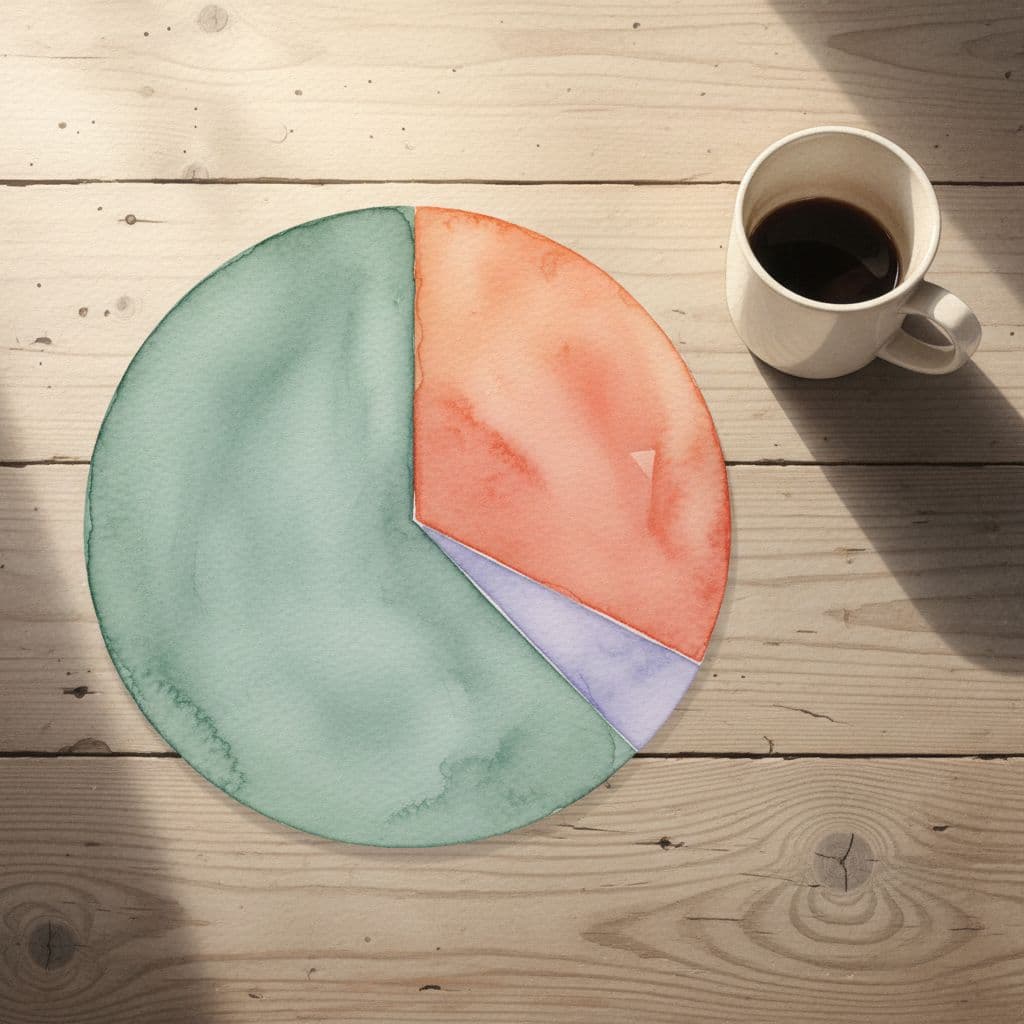
The 50/30/20 budget is popular because it gives you three buckets instead of twenty. You use your after-tax income and split it into needs, wants, and savings or extra debt payoff.
Needs cover the basics, such as housing, groceries, utilities, insurance, transportation, and minimum debt payments. Wants include eating out, shopping, streaming, hobbies, and trips. The last 20% goes to savings, extra debt payments, or both.
If you bring home $4,000 a month, that rough guide would be $2,000 for needs, $1,200 for wants, and $800 for savings or debt. For a deeper example, see this 50/30/20 budget rule explainer.
Treat it as a guide, not a rule carved in stone. If rent eats 55% of your income, you’re not failing. You may need to cut wants harder, save a bit less for now, or look for ways to raise income.
Try a zero-based budget if you want every dollar to have a job
Zero-based budgeting is even more direct. You take your monthly income and assign every dollar a purpose until there’s nothing left unplanned.
That doesn’t mean you’re broke. It means every dollar already has a task, like rent, groceries, savings, debt, or fun. Planned income minus planned spending equals zero.
Some beginners love this method because it stops vague spending. Others find it too detailed at first. If you want to try it, a free zero-based budget template can make the setup easier.
Build your first monthly budget in a few simple steps
Now it’s time to turn those numbers into a working plan. Keep it plain. A basic budget works better than a fancy one you never open again.
Pick a simple template or tool you will actually use
Use the tool that feels easiest, not the one with the most features. Google Sheets and Excel Online are free and easy to update. A printable page works well if you like writing by hand. Some beginners also like simple apps such as EveryDollar, Goodbudget, or NerdWallet.
If you want a no-frills option, try a budget worksheet from Consumer.gov. If you prefer paper, a really simple budget worksheet PDF can be a good starting point.
Add your income, plan each expense, and check the math
Enter income first. Then add planned amounts for each category. Start with bills and must-pay items, then groceries and transportation, then savings, then flexible spending.
This quick example shows how a beginner budget might look:
| Category | Planned Amount |
|---|---|
| Take-home pay | $3,200 |
| Rent | $1,250 |
| Utilities | $150 |
| Groceries | $350 |
| Gas and transit | $180 |
| Phone and internet | $110 |
| Debt payments | $250 |
| Savings | $300 |
| Fun and eating out | $210 |
| Miscellaneous buffer | $100 |
| Total planned | $2,900 |
That leaves $300 unassigned, which you could send to savings, debt, or upcoming costs. The key point is simple: planned spending should never rise above income.

If your total is too high, don’t scrap the whole budget. Trim wants first. Lower flexible categories next. You can also delay nonessential purchases for one month and try again.
Give your budget a little breathing room for real life
Real life never follows a neat script. Gas jumps. School fees show up. You need cold medicine. A strict budget with no wiggle room often breaks by week two.
Add a small buffer category each month, even if it’s only $50 to $100. Think of it as shock absorbers for your finances. That cushion helps you stay on track without feeling like one surprise ruined everything.
Track your spending and fix common beginner mistakes
A budget only works if you check it. That doesn’t mean staring at numbers every day. It means giving your plan a short weekly look so it stays useful.
Check your spending each week so small problems stay small
Set aside ten minutes once a week. Look at your bank app, credit card app, receipts, or a note on your phone. Compare what you planned with what you spent.
This habit helps you catch problems early. If groceries are already high by the second week, you can cut takeout before the month gets away from you. If gas is lower than expected, you can move the extra to savings.
Weekly reviews also make budgeting feel lighter. You aren’t waiting until the end of the month to find out what went wrong.
Avoid the mistakes that make a budget feel impossible
Most beginner budgets fail for a few common reasons. People forget subscriptions. They guess too low on groceries. They ignore debt interest. Or they build a plan so strict that normal life doesn’t fit inside it.
A missed $9 subscription can matter more than one skipped coffee.
Another common mistake is never revisiting the plan. Budgets are not statues. They need small changes as your rent, work hours, or goals change. If one category keeps missing the mark, raise it and trim somewhere else.
Progress matters more than perfection. If your first month is messy, that’s normal. A budget is not proof that you’re disciplined. It’s proof that you’re paying attention.
Budgeting gets easier once you stop trying to be perfect and start trying to be honest. Know your income, list your expenses, choose a method, build the plan, and review it often.
Your first budget does not need to look polished. It only needs to be real enough to guide your next money decision.
Set aside 20 minutes today and make a first draft. A rough budget on paper beats another month of guessing.