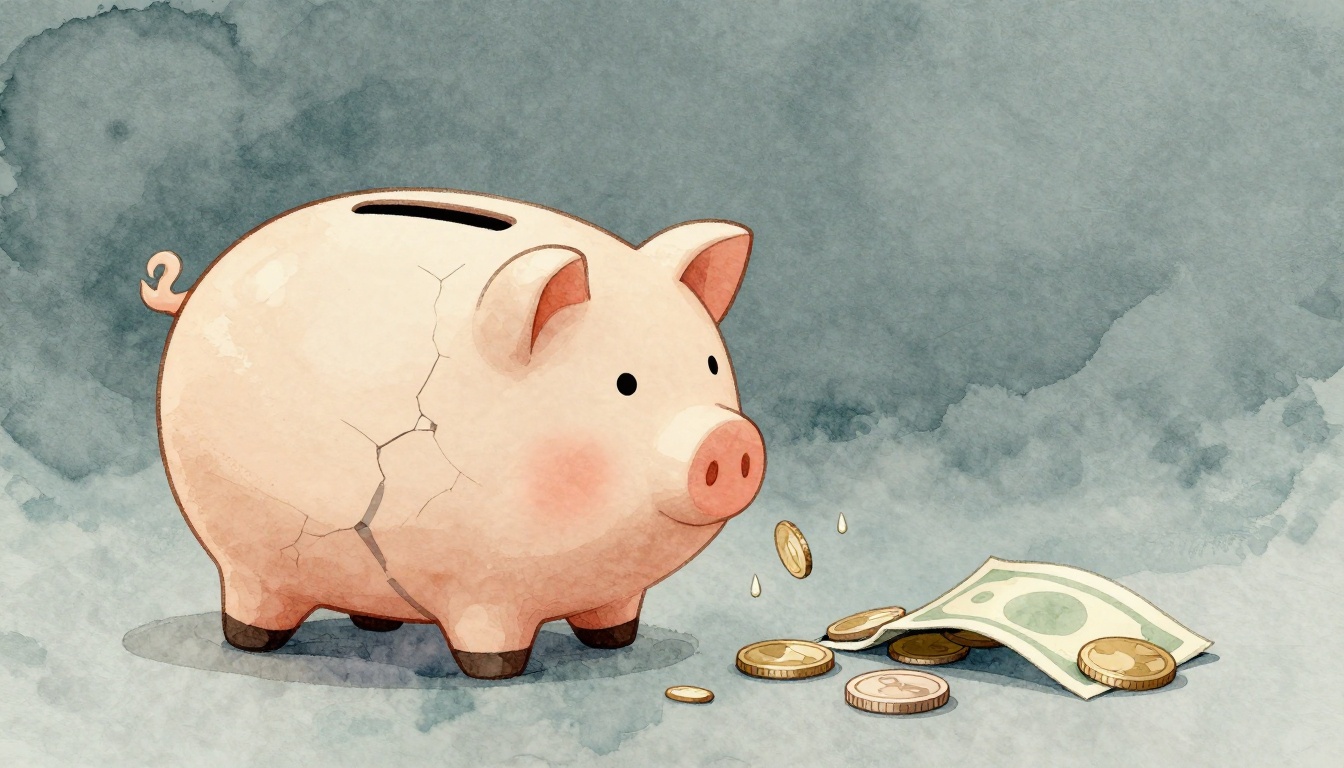
If saving money feels impossible, you’re not broken, lazy, or bad with money. A lot of people are stuck in the same loop, work, pay bills, try to be careful, and still end up with almost nothing left.
That pressure is real in 2026. The U.S. personal savings rate was only 4.5% in January, and recent data shows many households have little or no cushion at all. So if you’re wondering why you can’t save, it helps to look at the real problem instead of blaming yourself.
The real reasons you can’t save money
Most saving problems come from three things mixed together, high basic costs, quiet everyday spending, and weak money systems. That mix can make your paycheck feel like water in a leaky bucket.
Sometimes the issue is spending. Other times, your income simply can’t carry your bills. Often, it’s both.
Your income may be getting eaten up by basic living costs
For many people, the biggest drain isn’t shopping. It’s rent, groceries, utilities, insurance, gas, child care, and debt payments. By the time those are covered, there’s barely room left to breathe.
Recent rent data shows just how tight things are. Depending on the source and market, national rent figures in early 2026 ranged from about $1,363 to $2,000 a month. Add groceries, phone service, transportation, and insurance, and the numbers stack up fast. For a broader picture of where household money goes, see this 2026 household budget breakdown.
That matters because it helps you tell the difference between a spending problem and an income problem. If your fixed bills already eat most of your pay, saving isn’t hard because you’re careless. It’s hard because your margin is tiny.
The same pattern shows up in official spending data. The Bureau of Labor Statistics household spending data shows how much money goes toward basics before savings ever gets a chance. So if you’ve cut back and still can’t save, don’t miss the obvious answer. You may not have enough room in the budget yet.
Small everyday purchases can quietly drain your paycheck
At the same time, small purchases can still do real damage. They don’t look serious on their own, which is why they slip by.
A coffee here, takeout there, a few delivery fees, a streaming add-on, one late-night app purchase, none of it feels like a decision that changes your year. Yet those little taps on your card can pile up.
Take coffee as a simple example. Spend $6 on a weekday coffee five days a week, and that’s about $1,500 a year. Add lunch delivery twice a week, and the total jumps even more. It’s less like one big mistake and more like a slow leak under the sink.
This doesn’t mean you need to cut every treat. That’s not realistic, and it usually backfires. Still, if you never look at the small stuff, you’ll miss one of the easiest places to free up cash.
Money mistakes that make saving harder than it needs to be
Money stress often gets blamed on discipline. In real life, the bigger issue is usually how you handle money, not whether you care.
Bad systems beat good intentions all the time. That’s why people who want to save still end up stuck.
You save whatever is left at the end of the month
This is one of the most common problems. You pay your bills, spend through the month, and plan to move whatever is left into savings later.
Then later comes, and nothing is left.
If saving only happens after spending, saving usually loses.
Money tends to spread out and fill the space you give it. If your checking account holds the full paycheck, your spending often rises to match it. That doesn’t mean you’re reckless. It means your brain treats available cash as spendable cash.
So when people say “pay yourself first,” they mean this, move some money to savings before life grabs it. Even a small amount works better than hoping extra money appears at the end of the month.
You do not have a clear plan for where your money goes
Guessing is expensive. Most people underestimate food, random online orders, subscription renewals, and swipe-and-go spending.
Cashless spending makes this worse because it doesn’t feel real in the moment. You tap your phone, the receipt vanishes, and the money is gone before your brain fully logs it.
Subscriptions are another quiet drain. Some 2026 estimates put subscription spending around $219 a month per person, and many people forget at least one auto-renewal. That’s a lot of money disappearing in the background. If food spending keeps surprising you, it helps to compare your habits with a realistic grocery budget target for 2026.
Tracking doesn’t need to be fancy. You don’t need a color-coded spreadsheet or a five-tab app. You only need an honest list of what left your account.
Debt and interest keep stealing money you could be saving
Debt can trap your money before you ever see it. Minimum payments, interest charges, and buy now, pay later plans all shrink the cash you could have saved.
Credit cards are the biggest problem for many people because the balance keeps charging you for old spending. A $200 minimum payment isn’t only a bill. It’s also money that can’t go toward your emergency fund, car repair, or future rent.
Buy now, pay later can feel harmless because each payment looks small. Yet stack three or four plans together, and your budget starts limping. The same goes for personal loans and high car payments.
Debt doesn’t always mean you did something wrong. Sometimes it’s how people cover gaps when wages don’t keep up. Still, if interest keeps pulling money out of your month, saving will feel harder than it should.
How to start saving money when it feels impossible
The good news is that saving usually gets easier once you stop trying to fix everything at once. Small wins matter because they create space and momentum.
You do not need a perfect budget. You need a system you can keep using on a tired Tuesday.
Start with a tiny savings goal you can actually hit
A lot of people fail because they aim too high too fast. They tell themselves they’ll save $500 a month, miss it, and quit.
Start smaller than your pride wants. Try $10, $20, or $25 per paycheck. If that feels too small, remember the goal at first is not size. It’s proof that you can do it again.
Tiny savings change your identity. You stop being someone who “can’t save” and become someone who saves a little every time. That shift matters more than most people think.
Round-up apps, no-spend weekends, or a simple 30-day challenge can help too. The point is to make the habit easy enough to stick.
Cut the expenses that matter least, not everything you enjoy
Saving works better when you trim low-value spending first. Cancel the subscription you forgot about. Stop paying delivery fees three times a week. Put a 24-hour pause on impulse buys.
Keep the things you truly enjoy if they fit. Drop the stuff you barely notice.
That approach feels less like punishment and more like control. You’re not cutting fun. You’re choosing what deserves your money. For many people, one or two changes in this area can free up enough cash to start an emergency fund.
Make saving automatic so you do not have to rely on willpower
Willpower is weak when you’re stressed, rushed, or bored. Systems work better.
Set an automatic transfer on payday, even if it’s small. Move the money into a separate savings account so it doesn’t sit next to your spending cash. Add spending alerts if your bank offers them. Put due dates and renewal dates on your calendar.
This helps because it removes the daily decision. You don’t have to “be good” every time. The system handles part of the work for you.
When the problem is bigger than budgeting
Sometimes you are not overspending at all. You are under-earning, covering too many people, or carrying bills that leave no room. That’s not a character flaw. That’s math.
In those cases, the goal is not a perfect budget. The goal is breathing room.
If you are living paycheck to paycheck, focus on breathing room first
If you’re on a low-margin budget, start with a small buffer. Even $250 to $500 can keep one bad week from turning into fresh debt.
Use any extra cash to catch up on urgent bills, cover must-pay costs, and avoid new high-interest balances. That may not feel like “saving” in the fun sense, but it still counts. You’re building stability.
A lot of people are in this spot. Recent data suggests nearly 24% of U.S. households lived paycheck to paycheck in 2025, and many others had little left after bills. So if this is you, you’re far from alone.
Look for ways to raise income if your budget has no slack
Cuts alone won’t fix a budget with zero air in it. At some point, more income matters more than more trimming.
That might mean asking for extra hours, applying for better-paying work, selling unused items, freelancing on weekends, or picking up short-term side jobs. Even a few hundred dollars a month can change your options.
This part is easy to resist because it takes effort up front. Yet when your bills already eat most of your paycheck, income growth can do what budgeting can’t.
Saving money is usually not about one big flaw. It’s a few fixable problems working together, high costs, untracked spending, debt, or no clear system.
Start with one move today. Track your spending for a week, cancel one subscription, or set up a small automatic transfer.
That first step may look tiny, but tiny is how progress starts.